Foundation Issues in Renfrew County's Older Housing Stock
Foundation problems are more common in Renfrew County than in many Ontario regions, largely because of the area's age of construction. A significant proportion of residential properties in communities like Pembroke, Renfrew, Arnprior, and Smiths Falls were built before 1970 — many in the postwar era when construction standards, footing depths, and drainage requirements were less stringent. Add decades of harsh Ontario winters, spring frost heave, and the Canadian Shield's demanding geology, and the result is a real estate stock with a higher-than-average incidence of foundation settlement, cracking, and wall movement. Understanding the nature and severity of a foundation problem is the first step in addressing it appropriately.
Types of Foundation Problems
Not every foundation crack carries the same risk. Learning to distinguish between cosmetic and structural issues will help you prioritize and communicate with professionals effectively.
Settlement Cracks and Vertical Cracks
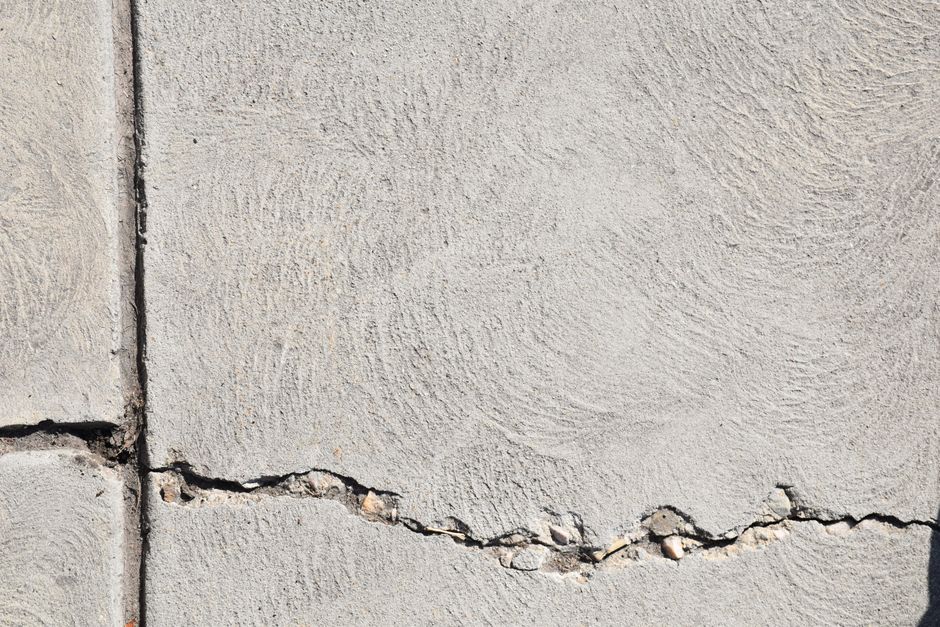
Vertical cracks running straight up and down a poured concrete foundation wall are among the most common findings in Ontario homes. Many are the result of concrete curing shrinkage — a normal process that causes minor cracking as concrete loses moisture. These cracks are generally not structural concerns if they are narrow (under 3mm), stable (not growing), and do not run the full height of the wall. However, even stable vertical cracks allow water infiltration and should be sealed to prevent progressive damage. Differential settlement cracks — diagonal cracks that are wider at one end — suggest that one part of the foundation has sunk more than another and warrant professional assessment.
Horizontal Cracks — A More Serious Sign
Horizontal cracks in foundation walls are significantly more concerning than vertical cracks. They typically indicate that soil pressure or hydrostatic pressure outside the wall is pushing the wall inward. In concrete block construction, horizontal cracking often runs along mortar joints. In poured concrete, a horizontal crack suggests the wall is bending under lateral load. Any horizontal crack should be assessed by a qualified professional — left unrepaired, lateral pressure can cause progressive bowing and eventual structural failure of the wall.
Bowing Walls
A foundation wall that has begun to visibly bow inward is a structural emergency. Bowing almost always indicates sustained lateral pressure from soil or groundwater combined with wall weakness — often occurring in older homes with unreinforced concrete block foundations. The degree of bowing determines the appropriate repair; minor bowing may be stabilized with carbon fibre straps or wall anchors, while severe bowing may require partial or full wall replacement.
Heaving and Frost Damage
Frost heave occurs when water in the soil beneath or adjacent to a foundation freezes, expands, and lifts the foundation upward. When the ground thaws in spring, the foundation settles — but not always back to its original position. Over many freeze-thaw cycles, this can produce uneven settling, stair-step cracking at block corners, and sloped or unlevel floors. In Renfrew County, spring is the most common time for homeowners to notice new cracks or changes in existing ones as the ground thaws unevenly. Shallow foundations that do not extend below the frost line (a minimum of 1.2 metres in most of Ontario, deeper in northern areas) are particularly susceptible.
Foundation Repair Methods
Polyurethane Crack Injection
For non-structural vertical cracks that allow water infiltration, polyurethane foam injection is a common and effective solution. Ports are drilled along the crack at intervals, and expanding polyurethane foam is injected under low pressure, filling the crack from the inside out. Polyurethane remains flexible after curing, accommodating minor future movement. It does not restore structural integrity but does effectively seal the crack against water entry. This is a cost-effective approach for isolated hairline to medium-width cracks in poured concrete walls.
Epoxy Crack Injection
Where a crack in a structural concrete element needs to be sealed while also restoring some tensile strength across the crack plane, epoxy injection is used. Epoxy cures rigid and bonds strongly to concrete. It is appropriate for structural cracks in load-bearing walls or elements, but should not be used in situations where ongoing movement is expected (epoxy's rigidity means it can re-crack if the wall continues to move). A structural engineer's assessment may be required to determine whether polyurethane or epoxy injection is appropriate for a specific crack.
Carbon Fibre Straps for Bowing Walls
Carbon fibre reinforcement systems are installed on the interior face of a bowing wall to arrest further inward movement. High-strength carbon fibre straps are bonded to the wall surface with epoxy, typically spanning from the basement floor to the floor joist above, effectively providing tensile restraint against further bowing. Carbon fibre systems do not restore a bowed wall to its original position — they stabilize it where it is. They are minimally invasive compared to full wall replacement and are a popular repair for moderate bowing in block or poured concrete walls. A P.Eng. assessment is required to determine whether the degree of bowing is within the range that carbon fibre can safely address.
Underpinning
When a foundation has settled because the soil beneath it has compressed, eroded, or shifted, the foundation must be deepened or supported on deeper, more stable material. Traditional mass concrete underpinning involves excavating beneath the existing footing in alternating sections and extending the footing downward with new concrete until it reaches stable soil. Helical pier and push pier underpinning systems drive steel elements deep into the ground mechanically, transferring the load down to stable bearing strata. Piers can often be installed from the interior with minimal excavation, making them increasingly common for residential applications. Underpinning projects require a building permit and a P.Eng.-stamped design in virtually all Ontario municipalities.
When a Structural Engineer (P.Eng.) Is Required
In Ontario, only licensed Professional Engineers (P.Eng.) are authorized to perform structural assessments and provide engineering opinions on the safety and structural adequacy of building elements. For foundation repair, you should engage a P.Eng. when:
- You observe horizontal cracks or any bowing in a foundation wall
- Settlement appears differential — one side or corner of the home has moved more than another
- A building permit is required for the proposed repair (most municipalities require P.Eng.-stamped drawings for structural work)
- A mortgage lender or home buyer's solicitor requires an engineering report
- You are unsure whether a crack or movement is structural or cosmetic
- Underpinning, piering, or wall anchoring is being proposed
A P.Eng. assessment for a residential foundation typically costs $1,000 to $3,000 and provides a written report with findings and recommendations. This report also provides documentation that repair was performed to a professional standard — valuable for future resale.
Building Permits for Foundation Work
In Ontario, building permits are required for construction, renovation, addition, and alteration projects that affect the structural components of a building. Simple crack injection with polyurethane foam is typically a maintenance activity that does not require a permit. However, any work that modifies the structural capacity of the foundation — including underpinning, piering, installation of wall anchoring systems, or wall reinforcement — generally requires a building permit from your local municipality's building department. Permit applications for structural work will typically require drawings or a report stamped by a P.Eng. Do not begin structural repair work without confirming permit requirements first.
Local Causes of Foundation Problems in Renfrew County
Several factors specific to the Renfrew County region contribute to above-average rates of foundation distress:
- Frost heave: Ontario's standard minimum footing depth is 1.2 metres below grade, but many pre-1970 homes in the county were built with shallower footings. Annual freeze-thaw cycles progressively lift and settle shallow foundations, causing cumulative cracking and differential settlement.
- Canadian Shield geology: Shallow soil over bedrock means some properties have minimal soil depth before hitting rock — which can limit drainage and concentrate frost action. Other areas have deep deposits of silt or clay from ancient glacial lake beds, which are prone to compression and slow settlement when loaded.
- Spring meltwater: High volumes of meltwater in March and April saturate soils, raise water tables, and increase hydrostatic pressure against foundation walls — all compounding the stress on foundations that have been weakened by winter frost action.
- Age and deferred maintenance: Many Renfrew County homes have not had major foundation inspections or maintenance in decades. Problems that began as minor cracks 30 years ago may have progressed significantly through ongoing freeze-thaw cycling and water infiltration.
Foundation Repair Cost Ranges
- Polyurethane crack injection: $500–$1,500 per crack (depending on length)
- Epoxy crack injection: $800–$3,000 per structural crack
- Carbon fibre strap system (bowing wall): $5,000–$15,000 for a typical residential installation
- Wall anchor system: $4,000–$12,000 depending on number of anchors required
- Helical or push pier underpinning: $15,000–$50,000+ depending on number of piers and depth required
- Mass concrete underpinning: $20,000–$60,000+ for significant settling issues
- P.Eng. assessment and report: $1,000–$3,000
Area Coverage
This guide applies to homeowners throughout Renfrew County and the surrounding region, including Pembroke, Petawawa, Renfrew, Arnprior, Bancroft, and Smiths Falls. Foundation concerns, soil conditions, and the age of housing stock vary by community — properties in older town cores tend to have the oldest foundations while newer rural subdivisions may present different issues related to site drainage and fill placement.
Related Grants & Financial Programs
Frequently Asked Questions — Foundation Repair in Renfrew County
How do I know if my foundation crack is serious?
Vertical cracks in poured concrete walls are common and often result from normal curing shrinkage — they may allow water infiltration but are generally not structural concerns if narrow and stable. Horizontal cracks in block or concrete walls are more serious; they indicate lateral soil or hydrostatic pressure and can signal progressive bowing. Diagonal cracks at window or door corners often indicate differential settlement. Cracks wider than 6mm, cracks that are actively growing, any horizontal crack, or any crack accompanied by wall bowing should be assessed by a licensed structural engineer (P.Eng.) without delay.
What does foundation repair cost in Ontario?
Foundation repair costs vary widely. Polyurethane crack injection for a single non-structural crack runs $500 to $1,500. Epoxy injection for structural cracks costs $800 to $3,000. Carbon fibre strap installation for a bowing wall typically runs $5,000 to $15,000. Underpinning to stabilize a settling foundation costs $15,000 to $50,000 or more depending on the number of piers and depth required. Structural engineer fees add $1,000 to $3,000 on top of contractor costs for any complex work.
Do I need a structural engineer for foundation repair?
For cosmetic crack injection only, a structural engineer (P.Eng.) is not always required. However, for any repair involving structural integrity — underpinning, piering, wall anchoring, or carbon fibre reinforcement for bowing — an engineer's assessment is typically required. Building departments in Ontario often require a P.Eng.-stamped design or report before issuing permits for structural foundation work. If you are selling and a home inspector flags foundation issues, a P.Eng. report will be required by most buyers' lenders.
What is underpinning?
Underpinning is a foundation repair method used when the existing foundation is not deep enough or strong enough to support the structure above it — typically because of soil settlement, erosion, or inadequate original design. The process involves extending the footing deeper until it reaches stable soil or rock. Traditional mass concrete underpinning fills excavated sections with concrete. Helical pier and push pier underpinning drives steel elements to load-bearing depth with less excavation, and is increasingly common for residential use in Ontario. All underpinning requires a building permit and a P.Eng.-stamped design.
Do I need a permit for foundation repair?
Simple crack injection with polyurethane foam typically does not require a building permit in Ontario. However, any work that modifies the structural capacity of the foundation — underpinning, piering, wall anchors, or carbon fibre reinforcement systems — generally requires a building permit from your local municipality. Permit applications for structural work will require drawings or a report stamped by a P.Eng. Do not begin structural repair work without confirming permit requirements with your local building department first.
What causes foundation problems in Renfrew County homes?
Renfrew County's older housing stock — many homes built before 1970 — was often constructed with foundations that do not meet today's standards for depth or reinforcement. Shallow footings are susceptible to frost heave, where frozen ground lifts portions of the foundation and then settles unevenly each spring. The Canadian Shield geology creates variable conditions: some areas have shallow soil over bedrock, others have deep clay or silt deposits prone to compression. High water tables near the Ottawa River increase hydrostatic pressure. Decades of freeze-thaw cycles progressively widen any existing cracks, and deferred maintenance compounds damage over time.