About Eganville
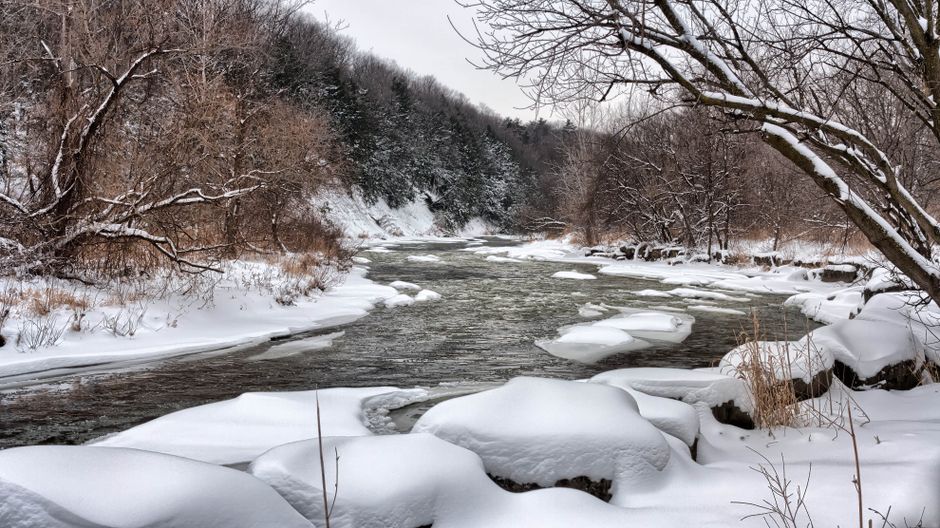
Eganville is a village of approximately 1,500 permanent residents in the Township of Bonnechere Valley, situated where the Bonnechere River flows through a landscape of Canadian Shield granite outcrops and limestone formations. About 50 kilometres southwest of Pembroke via Highway 60, Eganville serves as the commercial centre for a broad rural area encompassing the townships of Bonnechere Valley, South Algonquin, and surrounding areas.
Eganville is best known to the broader public as the gateway to the Bonnechere Caves — a series of limestone caverns formed 500 million years ago in marine sediments that now reveal fossilized sea creatures and dramatic underground formations. The caves draw visitors from across eastern Ontario and represent the limestone karst geology that underlies parts of the Bonnechere Valley beneath the overlying Shield rock. This local geology — limestone and marble intersecting with Precambrian granite — is directly relevant to well drilling, septic system design, and foundation behaviour in the area.
Like most communities in this part of Renfrew County, Eganville's surrounding area is heavily rural: mixed farming, woodlot properties, and a growing number of recreational and seasonal properties. The Bonnechere River and nearby lakes support a cottage economy. Natural gas does not reach Eganville; propane and fuel oil are the primary heating fuels for rural properties, and wood heating is common as a supplement or primary heat source.
Most rural properties in the Bonnechere Valley are on private wells and septic systems. The village core has municipal water and sewer, but the majority of the surrounding area does not.
Housing Stock and Common Issues
Eganville's housing stock spans a wide age range and reflects the area's rural, agricultural, and village character:
- Older village housing (pre-1960) — The Eganville village core has a mix of Victorian commercial/residential buildings and early 20th century housing. These homes are 70–130 years old, typically with minimal insulation, propane or oil heating, and aging electrical systems.
- Rural farmhouses — The surrounding Bonnechere Valley has a substantial inventory of older farmhouses — many 80–120 years old — in various states of maintenance. These properties often have deferred maintenance, mixed heating systems (propane furnace plus wood stove backup), and infrastructure that has been incrementally modified over decades.
- Seasonal and recreational properties — Lakes and rivers in the Bonnechere Valley attract seasonal property owners. Cottages of varying age and condition, many not designed for winter use, are increasingly being converted or upgraded.
- Karst geology considerations — The Bonnechere Valley's limestone and marble geology creates site-specific challenges. Sinkholes, subsurface voids, and unpredictable drainage patterns occur in limestone karst areas. Before drilling a new well, installing a septic system, or building a foundation in karst-area locations, geological assessment is advisable. The Bonnechere Caves are the visible evidence of what can happen to limestone over geological time.
- Well drilling on the Shield-limestone boundary — Eganville sits at the boundary between Canadian Shield granite to the north and limestone/marble formations to the south. Well drilling conditions vary dramatically by location. Limestone wells can access productive water at relatively shallow depths; Shield wells require deeper drilling to fracture zones. Well records from the Ontario Well Registry provide useful context for local drilling conditions. See Ontario Well Record Search.
Top Home Maintenance Priorities
Well Water Testing — Karst Geology Caution
Eganville-area limestone karst allows surface water to move rapidly underground through cracks and conduits, bypassing natural filtration. This makes limestone-area wells more vulnerable to surface contamination than Shield wells. Annual coliform and nitrate testing is essential; after heavy rain events, additional testing is advisable.
Attic and Wall Insulation for Older Properties
Pre-1960 Eganville homes and farmhouses have virtually no insulation. At Eganville's northern location, heating propane or oil-heated homes through an Ottawa Valley winter with R-0 walls and R-12 attics is extraordinarily expensive. Deep energy retrofits financed through the Canada Greener Homes Loan are transformative for these properties.
Propane and Wood Heating Maintenance
Propane appliances in rural Bonnechere Valley properties must be serviced annually by a TSSA-licensed G2 gas fitter or propane fitter. Wood stoves and fireplaces require annual WETT-certified inspection and chimney sweep. Both are safety requirements that many rural homeowners defer too long.
Septic System Assessment
Rural Bonnechere Valley properties on older septic systems — particularly pre-2000 installations — should be assessed by a licensed designer. The local geology (limestone karst, variable till depths) affects leaching bed performance. Undersized or failing systems are common on properties that were never properly permitted or inspected.
Roof Snow Management
Eganville and the Bonnechere Valley receive significant snowfall from Ottawa Valley weather patterns. Older farmhouses with low-slope or flat-span roof sections should have structural framing inspected before a heavy snow season. Metal roofing is well-suited to the area's snow loads and is increasingly adopted as asphalt shingles on older buildings reach end-of-life.
Grants and Energy Programs
- Canada Greener Homes Loan — Up to $40,000 for Eganville-area homeowners. Older Bonnechere Valley farmhouses and village homes are prime candidates for the deep energy retrofits this loan finances.
- Oil to Heat Pump Affordability Program — Up to $10,000 for Eganville homes on fuel oil switching to heat pumps. Natural gas is not available in the Bonnechere Valley; this program is highly relevant for oil-heated rural properties.
- Low-Income Energy Programs — LEAP emergency assistance and Ontario Renovates housing repair grants are available to qualifying Bonnechere Valley households through Renfrew County social services. Contact the County of Renfrew housing department for current program eligibility.
- Accessibility Grants — Federal AAFP grants for accessibility modifications. Eganville's older housing stock and population demographics create meaningful demand for ramps, grab bars, and main-floor bathroom conversions.
Home Services
- Insulation — Top priority for older Bonnechere Valley homes and farmhouses
- Roofing — Snow load assessment and metal roofing for aging agricultural buildings
- Well Drilling — Shield and limestone geology drilling in the Bonnechere Valley
- Septic Systems — Assessment and replacement for older rural systems
- Basement Waterproofing — Older fieldstone foundations common throughout the area
- Foundation Repair — Structural assessment for century-old farmhouse foundations
- Electricians — Panel upgrades and rewiring for older village and rural homes
- Snow Plowing — Rural laneway plowing and village residential contracts
Hiring a Contractor in Eganville
Eganville is served by contractors from Pembroke (50km northeast) and Renfrew (40km southeast). Travel surcharges of $75–$100 per trip are typical. For karst-area well drilling and septic work, local contractor experience with Bonnechere Valley geology is essential — the limestone karst conditions around Bonnechere Caves and the wider valley floor require site-specific assessment that general contractors from larger centres may not be equipped to provide.
Wood stove and fireplace service is important in this area. WETT-certified inspectors and installers are the right choice for any wood heating system work. Annual chimney sweeping and WETT inspection is strongly recommended — chimney fires are a leading cause of house fires in rural Ontario.
Building permits for properties in the Township of Bonnechere Valley are issued by the township. For properties in surrounding municipalities (South Algonquin, Head Clara and Maria), confirm your permit authority with the appropriate township office. The County of Renfrew handles some building inspection services for smaller townships in the region.
The Canada Greener Homes Loan is particularly valuable for older Eganville-area farmhouses and village homes heated with propane. The combination of cold Climate Zone 6 winters, expensive propane, and minimal insulation creates the highest-payback scenario for deep energy retrofits. A comprehensive project — attic blown-in to R-49, air sealing, cold-climate heat pump — can cut annual energy costs by 40–60%. See our full Grants guide for program details and application sequence.